Why your flat roof is leaking (and why it is hard to find)
Think about how a flat roof works for a second. It is not actually flat, it is just low slope, with a membrane stretched across the deck and seams sealed where the sheets meet. Every penetration (vent, drain, HVAC curb, skylight) is a potential weak point. When something fails, water does not shoot straight down. It sits there in a puddle until it finds a path, then it migrates between the insulation layers and the deck before finally showing up inside. That is why the wet spot on your ceiling can be ten feet away from the actual breach.
So what are we usually looking for? In Keystone Crossing the big four are split seams (especially on older EPDM where the adhesive has dried out), failed pipe boots around plumbing vents, cracked sealant at HVAC curbs, and ponding water that has slowly broken down the membrane in low spots. Hail and wind from spring storms add puncture damage to that list. If your building is more than fifteen years old, you also start seeing fasteners back out and tent the membrane, which eventually splits.
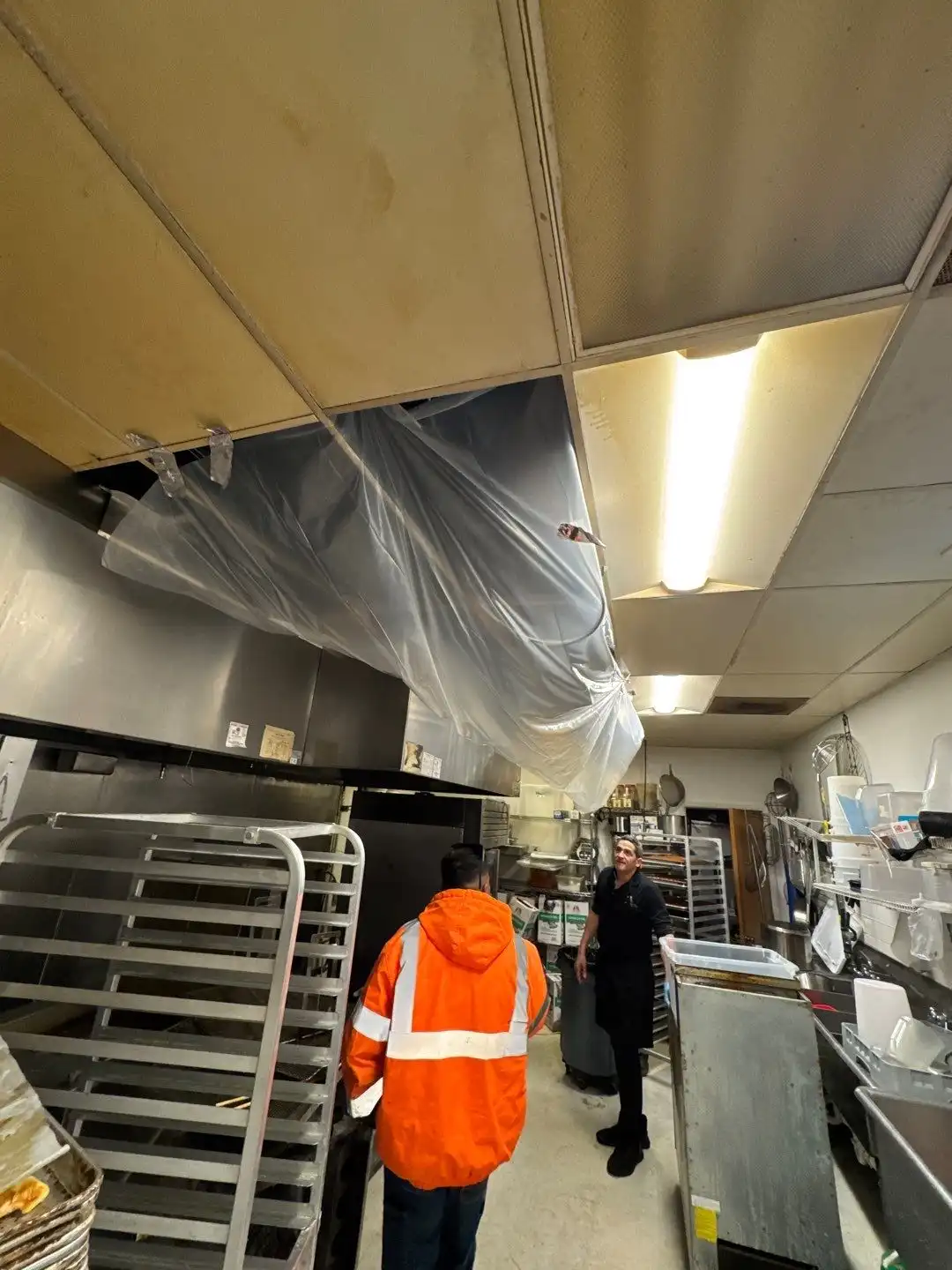
You can do a basic visual yourself if it is safe to get up there. Walk the perimeter, look at every seam, push gently on any blister or wrinkle, and check around every pipe and unit. If you see standing water more than two days after rain, that is a slope or drain problem and it needs attention even if it is not leaking yet. For active interior leaks during a storm, getting a tarp or temporary patch down is the priority while you sort out the permanent fix. If the water is also coming through ceilings or walls below, our team handling attic water damage from roof leaks can dry things out while the roof work gets scheduled.
One thing worth mentioning: a lot of Keystone Crossing flat roofs sit over conditioned space with very little ventilation, so a small leak can turn into a mold problem faster than it would on a pitched roof. If you smell something musty in the room below, do not wait. The membrane might still look okay from the top while the deck underneath is already soft. Tapping around suspect areas with the handle of a screwdriver tells you a lot. A solid thunk means dry deck. A dull, hollow sound means you have got water sitting in the assembly.
How we actually find the leak
When we come out for a flat roof inspection, we are not just eyeballing it. The phone call comes first so we can understand severity, whether it is actively leaking, and what kind of membrane you have. Then we schedule a real look. Depending on the roof, that might mean infrared scanning to find wet insulation under the membrane, a flood test on a section if it is isolated, or a careful seam by seam probe with a tool that catches loose laps. Thermal imaging is honestly the game changer here, because wet insulation holds heat differently than dry, and you can map the saturated area without cutting a single hole. We use a similar approach for interior diagnostics, which you can read about in our piece on moisture mapping with thermal imaging.
Once we find the entry point (or points, often it is more than one), we figure out whether you are looking at a spot repair, a section replacement, or whether the membrane is just done. A good honest assessment matters here. If we cannot help, we will tell you directly. Sometimes the right answer is a targeted patch that buys you five more years. Sometimes the insulation underneath is so saturated that patching the top is throwing money away, and you need to plan for replacement. There is a real difference between roof leak origin detection vs repair, and you should not pay for one when you needed the other.
What about the actual repair? On EPDM we are usually cleaning the area, priming, and applying a cover patch with seam tape and lap sealant. On TPO or PVC it is heat welding, which when done right is honestly stronger than the original seam. Modified bitumen gets torched or cold applied patches depending on what is up there. For pipe boots, we almost always replace the whole boot rather than caulking the old one, because caulk on a failing boot is a band aid that lasts one season.
What you can do to keep it from happening again
Here is the part most people skip. After we fix the leak, a flat roof needs a little ongoing attention or you will be calling us again in two years. Twice a year, ideally spring and fall, somebody should walk the roof. Clear the drains. Pull leaves and debris out of the corners where they collect against parapets. Look at every sealant joint at the curbs and check if anything has shrunk or cracked. If you see a fastener head poking up, that is the start of a future tear.
The other thing that quietly destroys flat roofs in Keystone Crossing? Foot traffic from other trades. HVAC techs, satellite installers, anyone walking around with tools in their pockets. If you have regular service visits up there, talk to Keystone Crossing Commercial Roofing about adding walk pads in the high traffic lanes. It is a cheap upgrade that protects the membrane where people actually step. And if a hailstorm rolls through, get an inspection even if you do not see an interior leak yet, because bruising on EPDM can take months to turn into a hole. Catching it early is the whole game with flat roofs.